
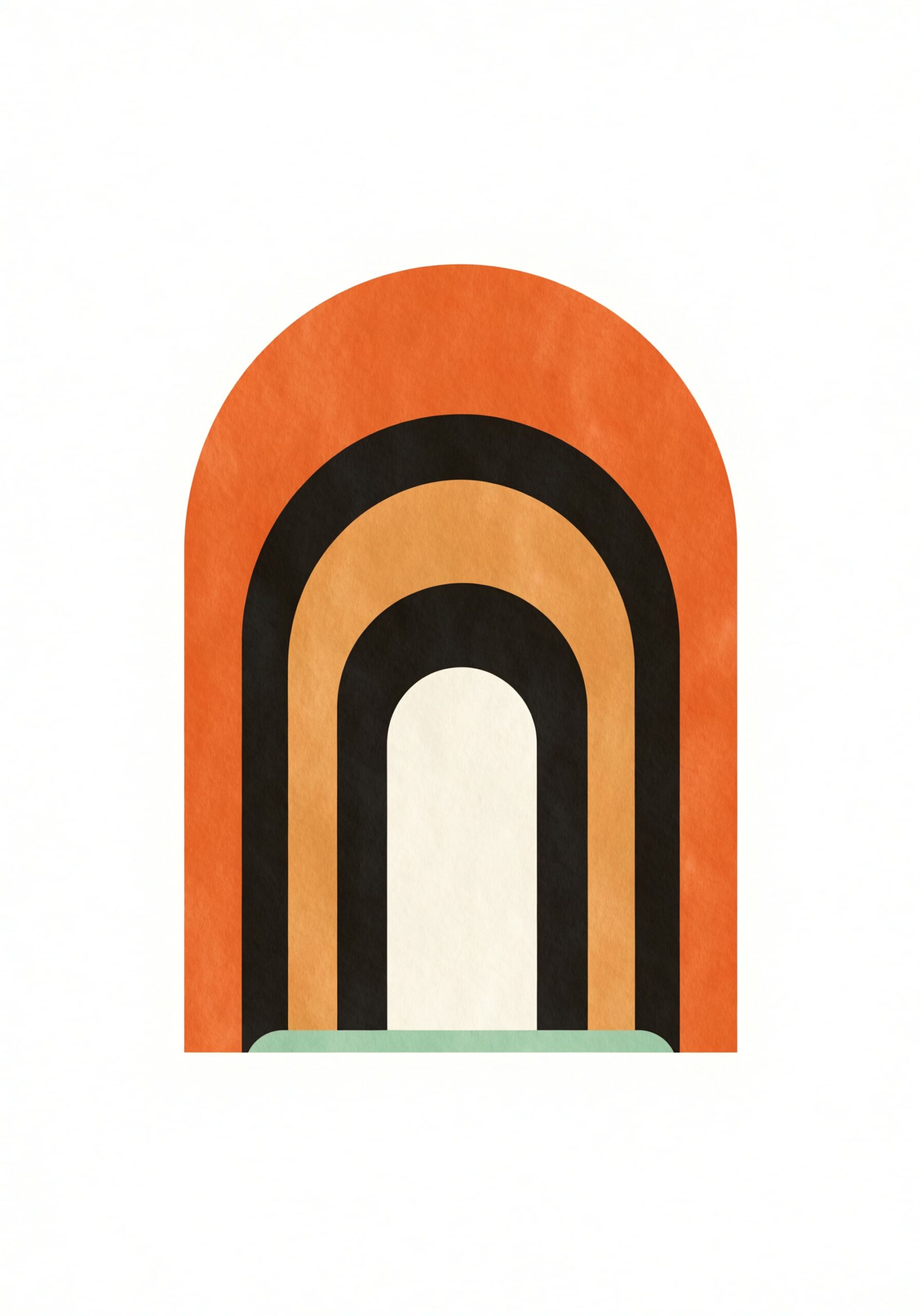
Warm earth tones are a gentle way to add character to a room without crowding it. Think terracotta, sand, clay, and soft cream. These shades sit comfortably next to white walls, light wood, and natural fabrics, which is why they work in so many homes.
Start by looking at the colors already in your room. A linen sofa, a wooden shelf, or a woven basket often has a hint of warmth you can echo. You do not need an exact match. A print that shares just one or two tones with your space will usually feel connected.
Simple shapes like arches are especially easy to live with. Their soft curves balance the straight lines of windows, doors, and furniture. Because the motif is abstract and has no text, it fits a bedroom, hallway, or home office equally well.
White space matters just as much as color. When you print, choose a size that leaves a generous margin, or add a mat inside the frame. That quiet border lets the shapes breathe and gives the whole piece a more finished look.
For printing at home, use a heavier matte paper if your printer allows it. Set the print quality to high, and do a quick test on plain paper first to check how the colors look. Printable files in A4 and US Letter cover the most common home paper sizes, so you can print right away or take the file to a local print shop.
When it comes to framing, a thin frame in light oak, black, or white keeps the look modern. Hang the piece so its center sits around 57 inches (145 cm) from the floor, which is roughly eye level for most people. Over a sofa or bed, leave about 6 to 8 inches of space between the furniture and the frame.
If you like a layered look, pair one larger print with a small object nearby, such as a ceramic vase or a stack of books. Keep it modest, though. A calm wall usually needs less than you think, and one well-placed print can be enough.
Finally, live with the print for a few weeks before deciding whether to add more. Light changes through the day and across seasons, and warm tones can look quite different in morning sun than in evening lamplight. Letting your eye adjust is an honest way to find out what your space really wants.