
An Advent coloring binder is a simple way to count down to Christmas: one printed page for each day, kept together in a binder so the finished pages become a small keepsake. It works for adults who want a quiet evening ritual and for families who color together after dinner.
This guide covers the materials that make the binder easy to use: which paper to print on, how to punch it without ruining the artwork, and what to color with. You do not need special equipment, but a few choices about paper weight and margins make the result sturdier and neater.
Pick a paper weight that holds up
Standard copy paper is usually 20 lb bond (about 75 g/m²). It feeds easily through any home printer, but it is thin. Pages tear at the punched holes after a few weeks of flipping, and heavy coloring can show through to the back.
Smooth white cardstock is the sturdier option. A 65 lb cover stock (about 176 g/m²) is a good middle ground: stiff enough to stay flat in a binder, still flexible enough for most inkjet printers. A heavier 110 lb cardstock (usually index stock, about 199 g/m²) feels more substantial and takes markers with less bleed-through. The honest downside is that not every home printer accepts it, so check your printer manual for the maximum paper weight and use the rear or manual feed tray if your model has one.
A smooth surface matters too. Textured or linen cardstock looks nice, but fine line art can print with slightly broken edges, and colored pencil skips over the texture. For detailed coloring pages, plain smooth white is the safer choice.
Leave room for the hole punch
Letter-size paper measures 8.5 × 11 inches (21.6 × 27.9 cm), and a standard US three-hole punch places the holes 4.25 inches (about 10.8 cm) apart along the long edge. The holes sit roughly 3/8 to 1/2 inch (1 to 1.3 cm) from the paper edge, which means artwork printed close to the margin can get cut.
Before printing all 24 pages, print one test page and hold it against your punch. If the line art comes within about 3/4 inch (2 cm) of the left edge, scale the print to 90–95 percent in your print dialog, or shift the margin if your software allows it. An adjustable three-hole punch lets you move the punch heads so the holes line up with your binder rings.
Cardstock reduces how many sheets a punch can handle at once. A punch rated for 10 to 20 sheets of copy paper may only manage 2 or 3 sheets of cardstock cleanly. Punching a few sheets at a time takes a little longer but gives crisp holes instead of torn ones.
Choose a binder and plan the order
A 1-inch ring binder comfortably holds 24 to 30 sheets of cardstock plus a few dividers. A clear front pocket lets you slide in a cover page, and an inside pocket is a handy place to keep pages you have not printed yet.
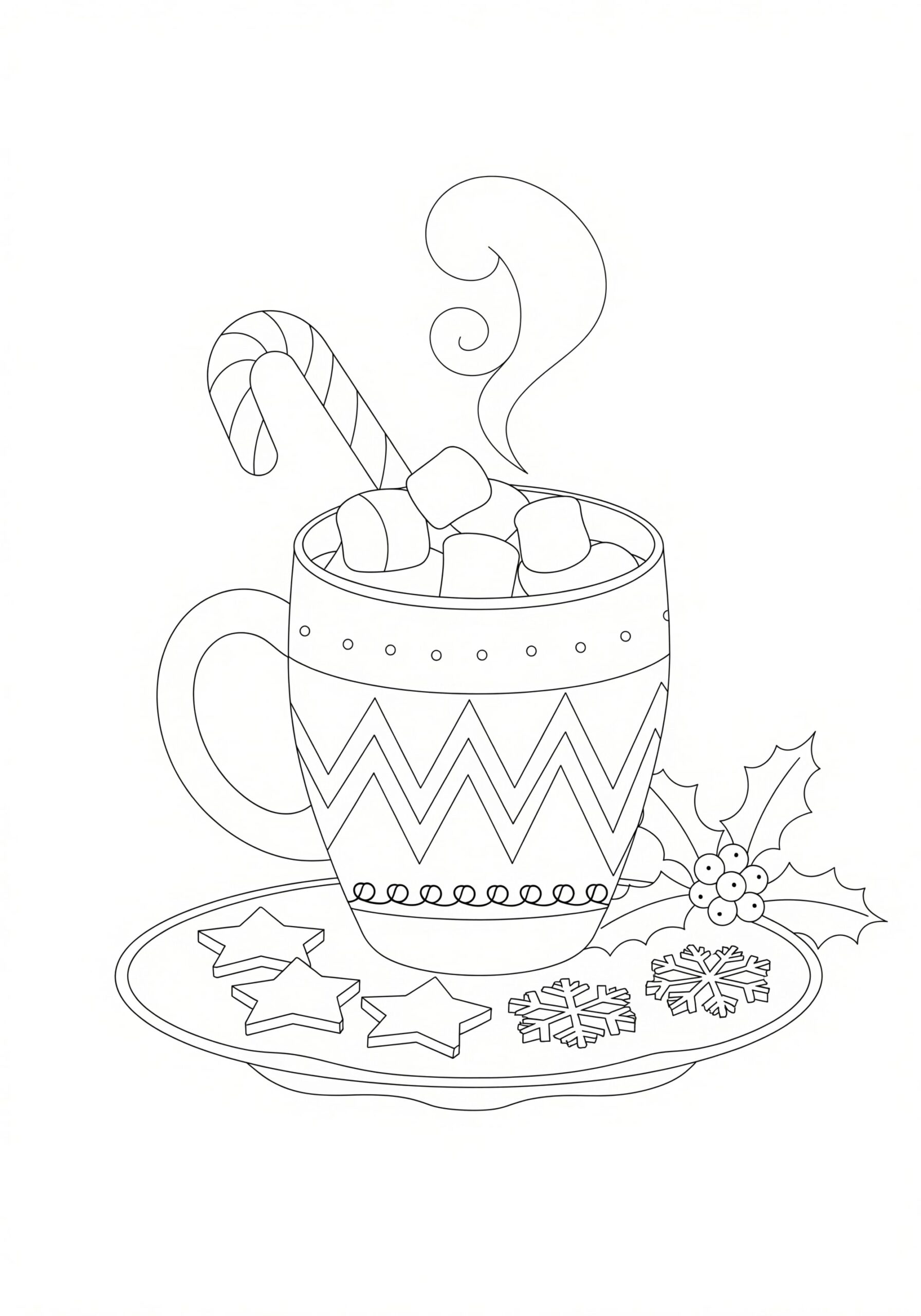
Decide on an order before you start. Some people print everything on December 1; others print a week at a time so they can swap in new designs. A cozy page like the hot cocoa mug with marshmallows and Christmas cookies makes a gentle first day, while busier scenes with more detail work well closer to Christmas, when you might want a longer coloring session.
Color with tools that suit the paper
Soft-core colored pencils are a natural match for cardstock. The slightly firmer surface lets you build up several layers of color and blend them without wearing through the paper. Start with light pressure and add darker layers gradually, especially in small areas like cookie sprinkles or marshmallow edges.
Markers can be used on cardstock as well, but expect some ghosting on lighter weights. Slip a scrap sheet behind the page while you color so ink does not transfer to the next page in the binder. Let marker pages dry for a few minutes before closing the binder, or the wet ink may smudge onto the facing page.
One small habit helps a lot: keep a blank sheet of cardstock at the front of the binder as a test page. Try new color combinations there first, and by Christmas it becomes a colorful swatch sheet of its own.
A calm countdown worth keeping
An Advent coloring binder needs only a few thoughtful choices: cardstock around 65 to 110 lb, a margin wide enough for the punch, and pencils or markers that suit the paper. Print a test page first, punch a few sheets at a time, and keep the order flexible. By December 24, you will have a finished collection of pages that is easy to flip through again next year.